Company Overview
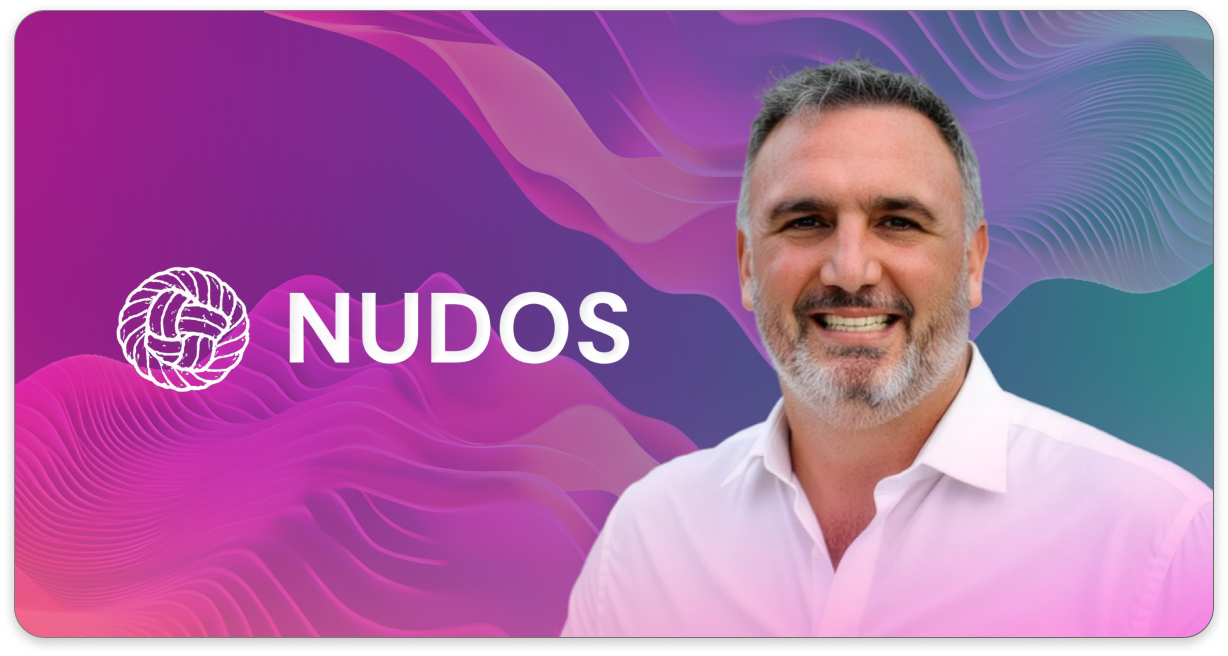
Juan Ignacio Tabarez is CEO & Co-Founder at Nudos, where vessel data meets underwriting; “The Infra Layer for Marine Risk”. Learn more at nudos.app.
Can you tell us a little about your background before starting at your company?
I studied Business Administration and Technology and built my career across strategy, operations, technology, and business transformation, working with companies including Coca-Cola FEMSA, LVMH, and Nespresso.
Alongside that professional background, I’ve been a lifelong sailor. That combination of business, technology, operational experience, and firsthand exposure to marine assets ultimately shaped the way I started thinking about risk, data, and how physical assets are evaluated.
How did you start at your company? What were the first steps you took to get it off the ground and how did you identify the need for your product/service in the market?
Nudos started with a question that became very personal to me.
I had rebuilt my own sailboat and knew it extremely well, yet I still missed a structural issue that almost sank it.
It made me wonder: if I couldn’t see it, how could an insurer see it from an application?
As we looked deeper into marine insurance, we realized this was not an isolated problem. Insurers have to make important decisions about physical assets, but much of the information available to them is still static, fragmented, and difficult to compare over time.
That became the foundation for Nudos.
We started by making condition evidence easy to capture from any smartphone and turning it into structured information an underwriter can actually use. But we quickly realized the bigger opportunity was not simply improving an inspection. It was creating a condition record that could persist with the asset and become more valuable over time.
Today, Nudos has scored approximately 1,200 vessels and is already working across the marine ecosystem with insurers, surveyors, brokers, and marinas.
What innovations or unique features set your company apart from others in the industry?
We believe the gap in marine is not simply inspection. It is continuity.
A traditional survey can provide a detailed view of an asset at a particular moment. Nudos is designed to make that physical condition structured, comparable, and repeatable.
Through a guided smartphone capture, we turn visual evidence from a vessel into structured condition information. Today, the platform evaluates more than 120 named checks and produces a condition score backed by the underlying evidence.
The real value begins when the vessel is captured again.
At renewal, after a repair, or during a claim, insurers can understand not only what the asset looks like today, but what has changed over time.
That longitudinal history is important because algorithms can be recreated. Historical evidence cannot. You cannot go back several years and recreate the physical condition of an asset that was never captured.
That is why we think about Nudos as more than an inspection tool.
We are building the condition data layer for marine assets, starting with insurance.
What has been the most effective strategy for scaling your business?
The most effective strategy for us has been to build with the industry rather than around it.
Marine insurance is a relationship-driven market. Working directly with carriers, surveyors, brokers, and marine specialists has helped us understand where condition data actually changes a decision and how our technology needs to fit into existing workflows.
Our entry point is intentionally simple: capture the condition of an asset when an insurer needs to make a decision.
From there, the same vessel can be captured again at renewal, following a repair, or during a claim. One initial assessment can therefore become the beginning of a much longer data relationship with the asset.
Partnerships are central to that strategy. We want to combine our technology and data infrastructure with the distribution, expertise, and workflows that already exist across the insurance ecosystem.
As we expand, we are also building relationships with strategic investors who understand insurance, data infrastructure, and enterprise distribution and can help us scale alongside the industry.
Looking ahead, what are your goals for the future of your company?
Our long-term goal is to make physical condition data as accessible and useful as other forms of financial and risk data are today.
Insurance is our starting point because insurers have an immediate economic reason to create that record. But once a persistent condition history exists, the same data can potentially support many other decisions around the asset: claims, valuation, financing, transactions, ownership, and operations.
In other words, the assessment is the entry point.
The record is the asset.
One of the biggest lessons I’ve learned as a founder is to stay very close to the underlying problem.
AI is advancing incredibly quickly, and the technology available to founders today is extraordinary. But technology by itself is rarely the company.
Understanding the workflow, the incentives, the missing data, and the people making the decisions is what tells you where technology can create lasting value.
In our case, the breakthrough is not simply AI. Smartphones and multimodal AI have fundamentally changed the economics of creating, interpreting, and maintaining physical condition evidence at scale.
That creates the opportunity to build something that was simply too expensive to build before: a persistent history of the physical condition of marine assets.