Company Overview
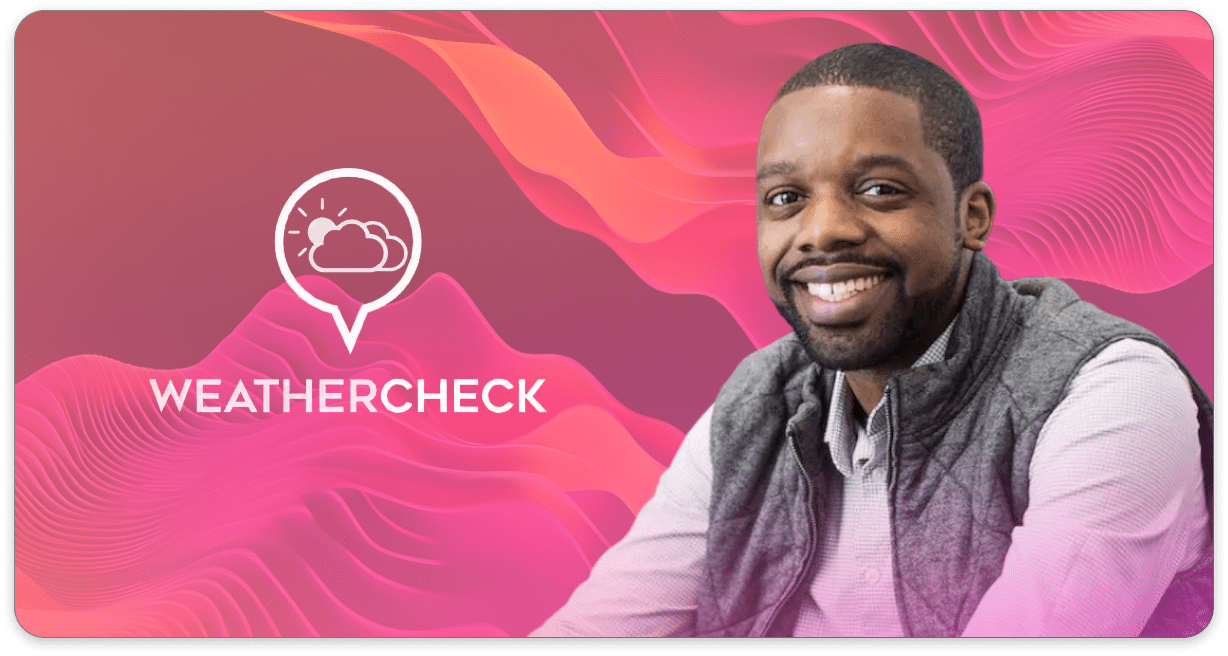
Demetrius Gray is the Founder and CEO of WeatherCheck, a company that monitors properties for hail damage so insurance carriers, mortgage companies, and property owners can take action. Learn more at https://www.linkedin.com/company/weathercheck/.
Can you tell us a little about your background before starting your company?
I was in the insurtech space for a number of years and built a company called Captain, which was acquired. It operated in disaster recovery finance, where we bought insurance-backed receivables from contractors across the country. Prior to that, I started a company called WeatherCheck, which focused on weather damage prediction—specifically atmospheric physics, material data science, and monitoring policies in force for major property and casualty insurers across the United States, largely for wind and hail losses. That’s my claim to fame. Before that, I worked in a family office, where I ran captive insurance operations for ultra-high-net-worth families.
How did you start your company? What were the first steps you took to get it off the ground, and how did you identify the need for your product or service in the market?
I come from a family of entrepreneurs. My grandfather invented the horizontal drill for fracking, and his company was later acquired, so entrepreneurship runs in the family. The idea came out of a need I saw while working at the family office. Around 2008 or 2009, gas was very expensive, and we were exhausted with deploying trucks. We wanted to validate whether there was a legitimate claim—or even an educated guess—before sending people out to homes or locations. That’s how we started. The family office became our first customer, and we grew from there.
At WeatherCheck, we followed the InsurTech Accelerator path and acquired our first major customer, Erie Insurance, by participating in an accelerator in Erie, Pennsylvania. I commuted weekly from my home in Kentucky to Erie. From there, additional insurers followed.
What innovations or unique features set your company apart from others in the industry?
Much of what has been built in recovery efforts has been funded through philanthropy, with limited investment overall. As a result, many innovations that the for-profit sector takes for granted haven’t made their way into nonprofit organizations that serve communities after disasters. Things like inventory management and automated accounting—systems you’d expect to be standard—often aren’t in place.
This became especially clear to me after spending the past year in Los Angeles volunteering during the LA wildfires. I saw firsthand how broken the system is, largely because money sits in the wrong places and doesn’t arrive at the right time. Bringing technology to bear in people’s most vulnerable moments is the work I decided to take up.
What has been the most effective strategy for scaling your business?
In recovery efforts, clients come to you. Long-term recovery groups and organizations that form after an event are looking for a core operating system to track families, distribute resources, and organize recovery effectively. While this type of application could have been built years ago, taking an AI-native approach has exponentially increased its value. It allows us to quickly identify resource gaps and allocate capital more efficiently, helping people recover faster.
Looking ahead, what are your goals for the future of your company?
We’re introducing an application in the App Store that we plan to partner with insurers on, which provides automated home inventory. Our focus is on helping people prepare in the long run. One of the most difficult parts of losing a home is having to remember everything you owned. That’s a problem technology can solve, and we’re fully committed to it. We’re hoping to launch in the App Store in the next few weeks—that’s where we’re headed.